Both lead types start with a driver, and both are sold in real time. That is where the overlap ends. This guide sets out how the two differ, why a lead captured for one cannot simply be sold to the other buyer type, and where each is covered on this site.
Key points
- MVA leads are bought by personal injury law firms and intakeIntakeThe process a law firm or its intake team uses to screen a potential client, collect the facts of the accident and injury, and decide whether to take the case. Glossary companies; auto insurance leads by agents, agencies and carriers.
- The forms ask different questions: accident and injury details vs vehicles, drivers and current coverage.
- Consent names who may contact the consumer and why. Consent for one buyer type does not automatically cover the other.
- Run separate forms, separate consent language and separate routing for each lead type.
MVA leads vs auto insurance leads, side by side
A driver creates a lead when they ask for something and agree to be contacted about it. What they ask for decides the lead type.
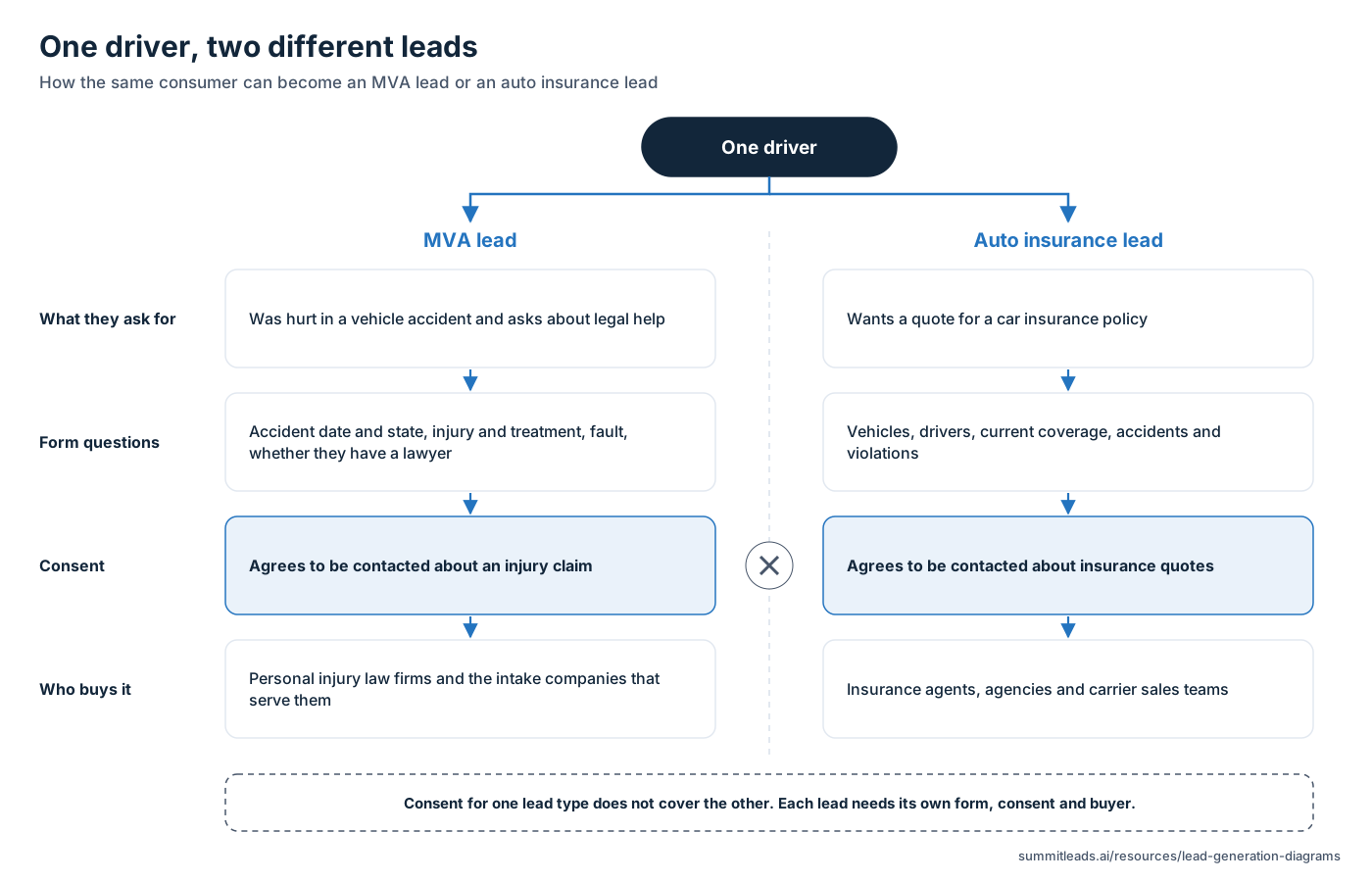
| MVA lead | Auto insurance lead | |
|---|---|---|
| What the driver wants | To speak with someone about legal representation after an accident | A quote for a car insurance policy |
| When it happens | Days or weeks after a crash | At renewal, after buying a car, after a rate increase, or when shopping |
| Who buys the lead | Personal injury law firms and the intake companies that serve them | Independent and captive agents, agencies and carrier sales teams |
| What the buyer does next | Screens the case and offers a consultation | Prepares a quote and offers a policy |
| What makes it valuable | Injury, liability, recency and whether the person already has a lawyer | Drivers, vehicles, current coverage and driving history |
For the MVA side in detail, see what are MVA leads and MVA leads for law firm buyers. For the insurance side, see auto insurance leads.
Different buyers, different questions
Each buyer type asks for the details it needs to act. A law firm cannot screen a case from vehicle and coverage answers, and an agent cannot quote a policy from accident and injury answers.
| MVA lead form | Auto insurance quote form |
|---|---|
| Date and state of the accident | ZIP code and state |
| Whether the person was injured and treated | Vehicles: year, make, model |
| Who was at fault, and whether a police report exists | Drivers and age ranges |
| Whether the person already has a lawyer | Currently insured, and for how long |
| Type of vehicle involved (car, truck, motorcycle, rideshare) | Accidents and violations in recent years |
The last row shows the one place the two meet: an auto quote form may ask about recent accidents to rate the driver. That answer is a rating factor for an insurance quote. It is not a request for legal help, and it does not make the driver an MVA leadMVA leadA motor vehicle accident lead: a person injured in a car, motorcycle, commercial vehicle or rideshare accident who is looking for legal help. Glossary.
Why consent does not carry across
Consent on a lead form records what the consumer agreed to: who may contact them, about what, and by which method. A driver who agreed to be contacted about insurance quotes did not agree to be contacted by a law firm about an injury claim, and the reverse is also true.
Federal rules require prior express written consentPrior express written consentUnder the TCPA, a written agreement signed by the consumer (an electronic signature counts) that clearly authorizes a seller to make telemarketing calls or texts using an autodialer or a prerecorded or artificial voice to a stated number. Glossary for certain marketing calls and texts made with automated technology or prerecorded voices. The current federal rule does not require consent to name a single seller, but the consent still has to be given for the calls that are made. Selling a lead to a buyer type the consent does not cover creates risk for the seller and the buyer. See prior express written consent for what the written agreement must contain.
This page is general information, not legal advice. If you plan to sell both lead types, have your consent language reviewed for each form.
How to run both lead types side by side
- Build separate forms for MVA and for auto insurance quotes, each with its own questions.
- Write separate consent language for each form that names the type of company that may contact the consumer.
- Keep separate consent certificates, stored with the lead they belong to.
- Route each lead type only to its own buyers, with its own filters.
- Report results by lead type and traffic source. Contact and conversion rates for the two are not comparable.
Sellers can read selling car accident leads and sell auto insurance leads. For how lead types differ in general, see types of leads.
Signs a form is mixing the two lead types
A form built for one lead type sometimes drifts toward the other. Check your forms, or a seller's forms, for these signs:
- An insurance quote form asks whether the driver was injured or wants to speak with a lawyer.
- An accident claim form asks about current coverage, vehicles to insure or a renewal date.
- One consent paragraph names both insurance agents and law firms.
- The same thank-you page offers both a quote and a legal consultation.
- Leads from one form are routed to both agencies and injury firms.
Each sign means the lead may not match what the consumer asked for, which raises contact and consent problems for every buyer that receives it.
Common mistakes
- Asking for legal help on an insurance form. Adding a "were you hurt?" question to a quote form does not create an MVA lead with consent for law firm contact.
- Reselling across buyer types. A lead that did not sell to agencies cannot be passed to injury firms, and the reverse.
- One consent paragraph for everything. Consent that tries to cover every possible buyer is harder to defend than consent written for the lead type.
- Comparing results across the two. An MVA lead and an auto insurance lead have different values, contact rates and outcomes.
Frequently asked questions
Can an auto insurance lead be sold as an MVA lead?
Not without consent that covers contact from a law firm about an injury claim, and a form that captured the accident details law firms need. In practice they are separate leads.
Do personal injury firms buy auto insurance leads?
No. Injury firms buy leads from people who were hurt in an accident and want legal help. Auto insurance leads are bought by agents, agencies and carriers.
Can one company buy both MVA and auto insurance leads?
It is rare, because the buyers are different businesses: law firms and intake companies on one side, agents and carriers on the other. A company that routes both keeps them on separate forms, consents and buyer lists.
Why does an auto quote form ask about accidents?
Recent accidents and violations are rating factors for car insurance. The answer helps the agent quote; it is not a request for legal help.
Related guides
Buying MVA or auto insurance leads?
Use the button for the lead type you buy, and tell us your states, daily volume or caps and delivery method.
Or write to team@summitleads.ai. We reply by email.
What happens next
- Step 1: You email us.
- Step 2: We reply by email.
- Step 3: Return terms are agreed on the onboarding call, before you go live.